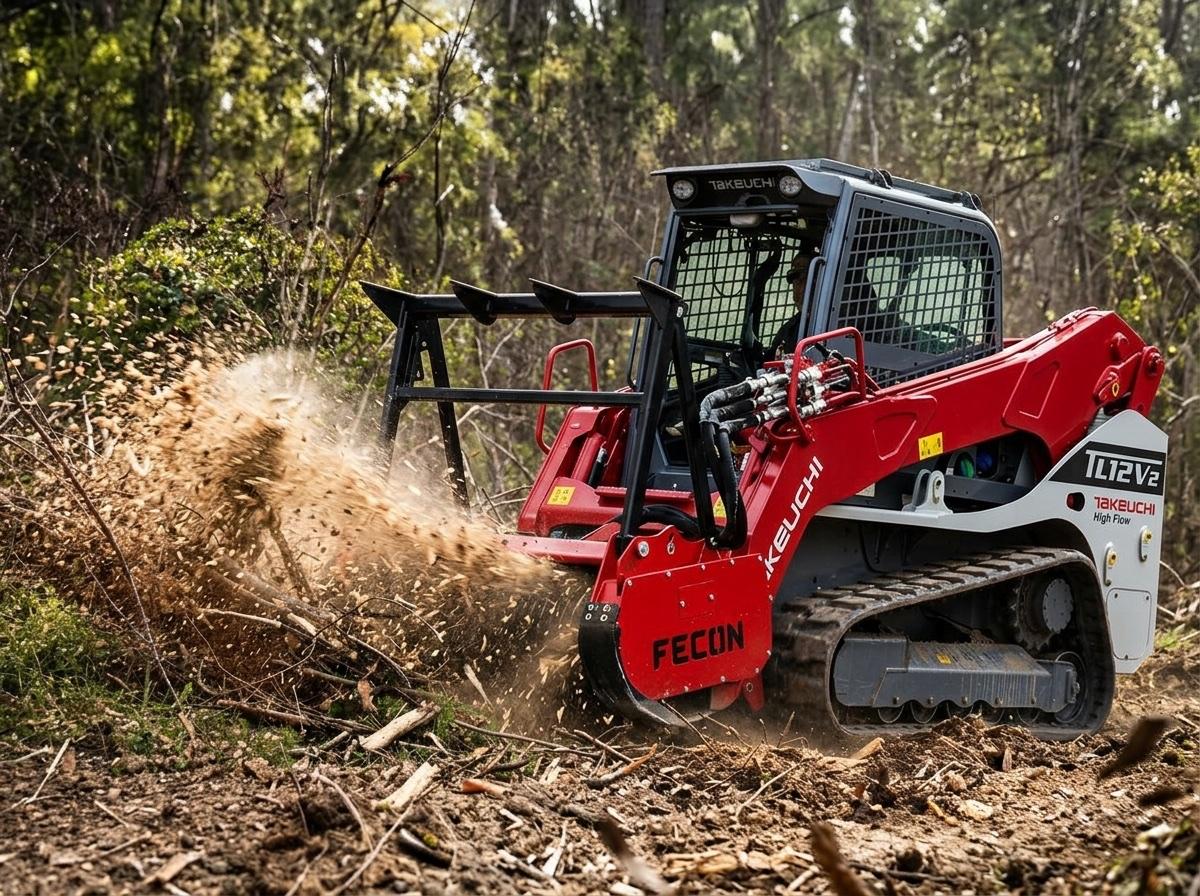
Mulch the brush where it stands
Forestry Mulching in Northeast Texas
Turn yaupon, privet, cedar, vines, pine saplings, and thick understory into ground-covering mulch instead of piles, burns, and haul-off chaos.
Built for rural acreage, ranch land, hunting properties, and wooded lots.
Scope-based pricing before work starts — no open-ended machine time surprises.
Trained through the same system behind one of the most watched land-clearing brands.
Open the land while protecting keeper trees, shade, screening, and wildlife cover.
Real transformation
Unusable land becomes usable again.
Every service is easier to understand when you see the before and after: the problem area becomes accessible, visible, and useful for the next thing you need to do.
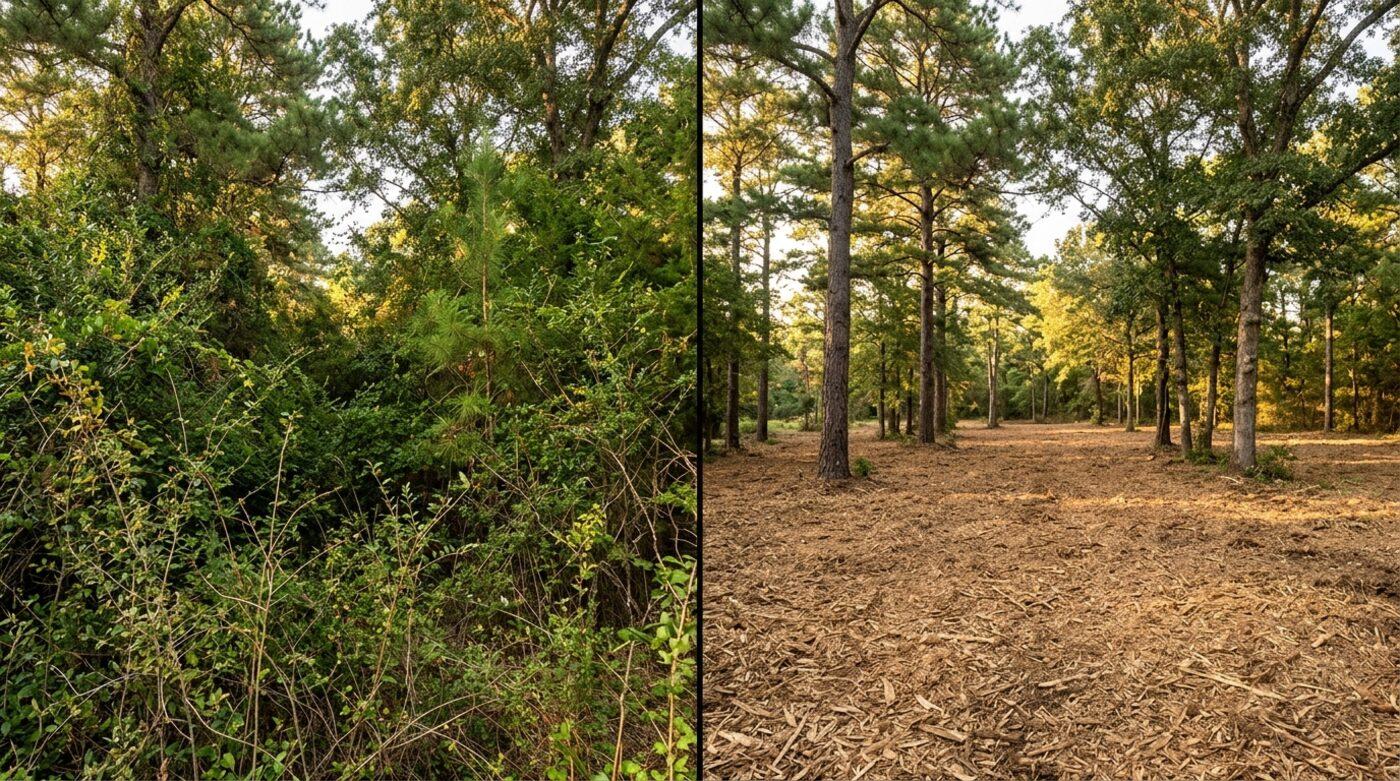
Transformation
Dense understory opened for usable acreage
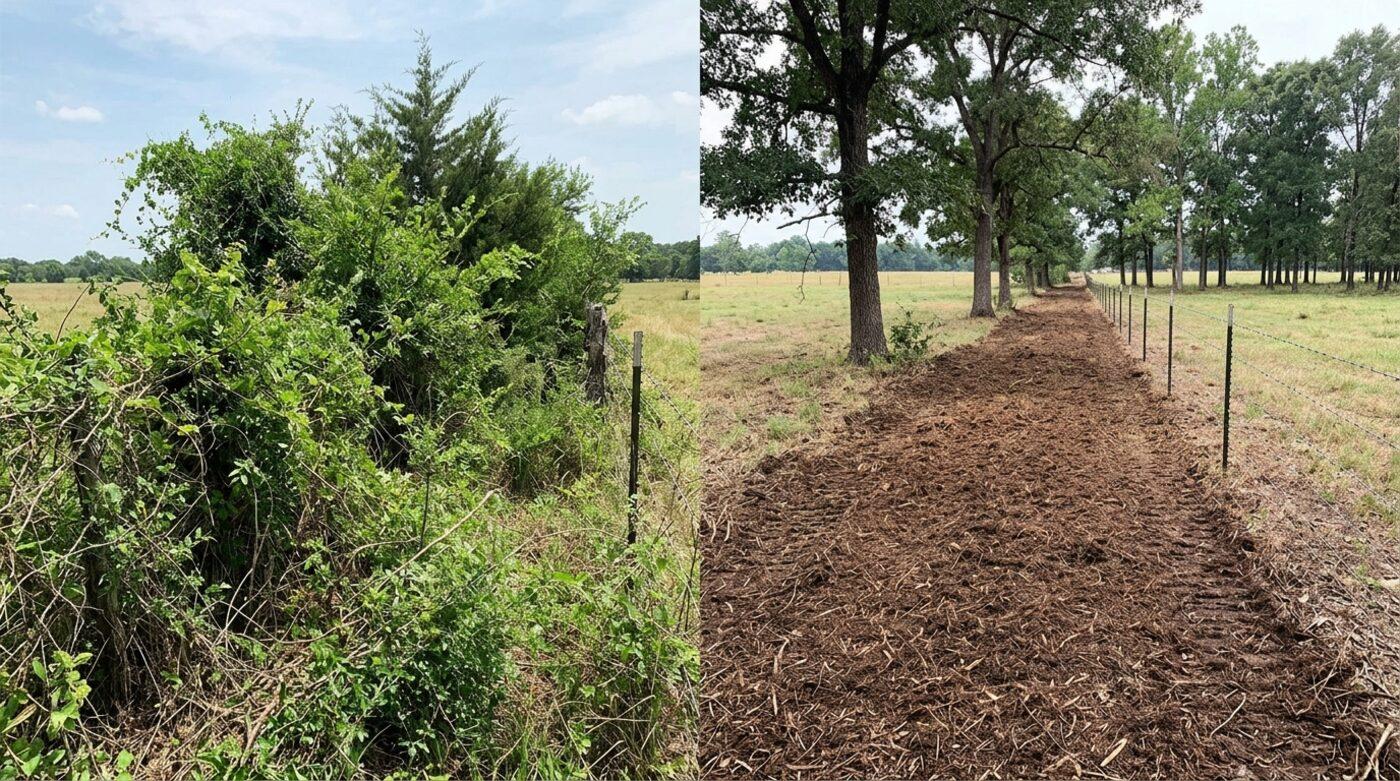
Transformation
Brush-choked fence row made maintainable
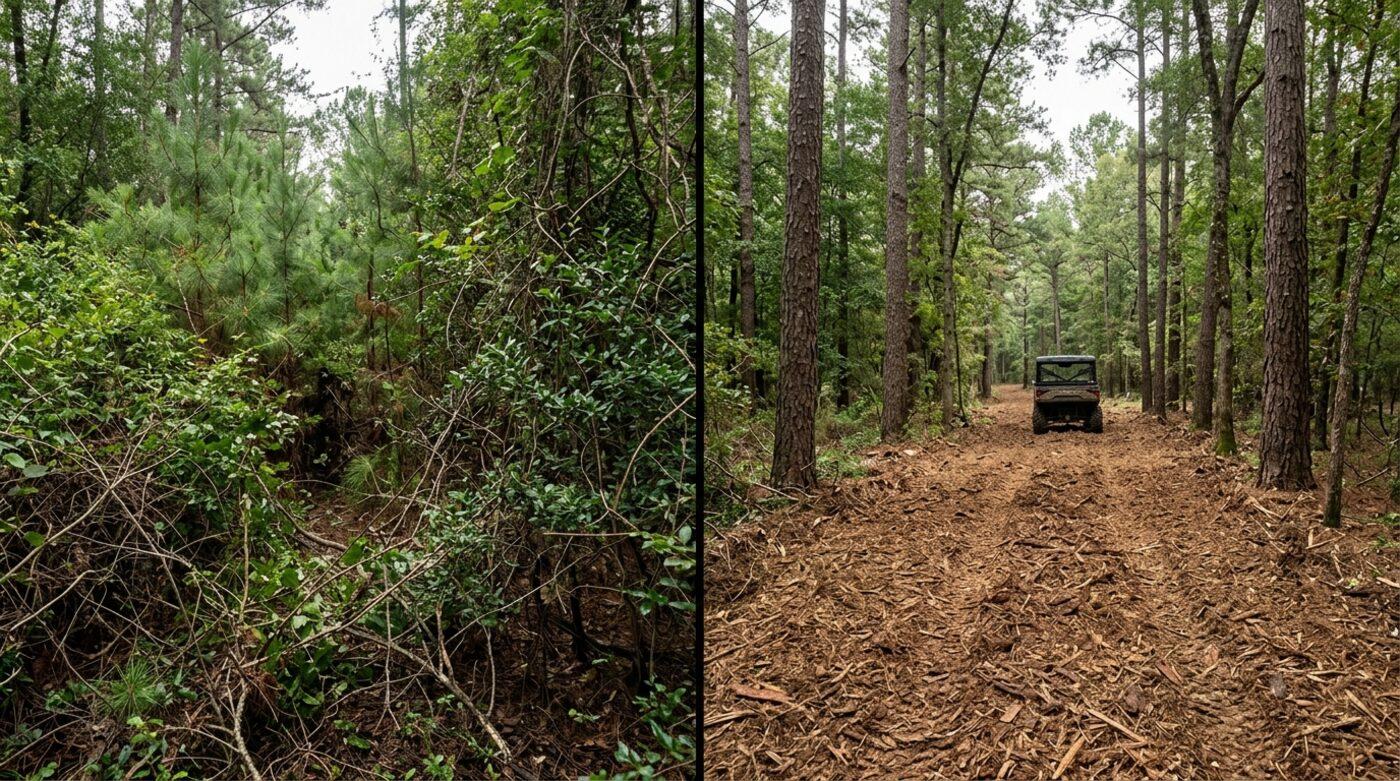
Transformation
Hunting and UTV access cut through thick growth
Why it works
Solve the problem. Leave usable land behind.
Forestry mulching is often the cleanest answer for Northeast Texas brush because it handles the material where it stands. Instead of cutting, dragging, piling, burning, or hauling everything away, the mulcher reduces brush and small trees into a layer of mulch on the ground.
That matters in this market. Large rural properties usually need access and visibility more than a scraped dirt finish. Mulching can open trails, fence rows, pasture edges, hunting lanes, and thick understory while keeping soil covered and reducing cleanup chaos.
It is best for brush and small material. Bigger timber, structural site prep, heavy dirt work, and finish grading may require a different plan, but mulching is usually the fastest path from “you cannot walk through it” to “you can use it again.”
No burn piles
Brush is processed where it stands instead of stacked into a second cleanup problem.
Cleaner access
Open trails, fence rows, pasture edges, and hunting lanes you can actually use.
Mulch layer
Ground cover helps reduce exposed soil and keeps the finish more natural.
Selective finish
Remove problem growth while preserving shade, privacy, and good trees where practical.
Know before you clear
What mulching is — and what it is not.
Good clearing is not just running a machine through the woods. The right approach depends on density, soil, slope, access, keeper trees, maintenance, and what you want the land to become.
Best fit
When this is the right move
Dense understory that makes acreage hard to walk or see through
Hunting trails, shooting lanes, food plot edges, and stand access
Fence rows, pasture edges, and rural property cleanup
Landowners who want a cleaner finish than cut, drag, pile, and burn
Watch-outs
Where cheap work gets expensive
Expecting mulching to replace all dirt work or large-tree removal
Mulching wet ground at the wrong time and creating ruts
Leaving too much material in driveways, pads, or future build areas
Not planning how the area will be maintained after regrowth starts
What is included
A cleaner finish without piles, burns, and guessing.
Every mulching project is scoped around the outcome: what needs opened, what should stay, how the area will be maintained, and what finish makes sense for Northeast Texas ground.
Process
Simple process. Big transformation.
A good job starts with scope and access, then ends with land you can walk, mow, hunt, fence, manage, or build toward.
Diagnose the Problem
We start with the reason the land is unusable: brush density, yaupon or privet pressure, drainage, access, fence lines, keeper trees, and final use.
Mark What Stays
Good clearing in East Texas is selective. We confirm boundaries, trails, gates, desirable trees, screening, and areas that should not be disturbed.
Clear for the Outcome
The machine work is matched to the goal: pasture recovery, hunting access, homesite opening, fence construction, storm cleanup, or long-term maintenance.
Leave It Maintainable
The finish should be cleaner, walkable, easier to mow or manage, and ready for the next step — not a pile of debris and ruts.
FAQ
Mulching questions.
The basics most Northeast Texas landowners want answered before they request a quote.
Ready to take back your land?
Get a clear project quote for mulching across Northeast Texas.